Sequence Dependency Ledger

Access Before Repair

Determining the exact preliminary demolition, containment barriers, and utility clearances required before primary trade restoration can safely proceed.

Workers preparing access for repair
Phase 01 Verified
Cavity Access Protocol
Trade expert avatar 1 Trade expert avatar 2 Trade expert avatar 3
+18 Field Specialists
3 Sequential Steps
Access Prerequisites
0 Order Overlaps
Conflict Prevention
100% Isolated
Dust & Containment
2 Trade Approvals
Cavity Handoff Sign-off
Trade Dependency Breakdown

Substrate Exposure and Preliminary Demolition Rules

Direct repairs to hidden pipe networks, concealed wiring, or damaged structural members cannot begin until surrounding assemblies are methodically opened. Premature repair attempts frequently cause secondary damage to undamaged trim, wallboard, and mechanical components when access paths are cut haphazardly.

Establishing proper access demands systematic planning of perimeter cutlines along stud centers, isolation of live electrical runs, and installation of negative air containment before mechanical technicians enter the workspace.

Sequential Access Prerequisites

  • 01
    Substrate & Concealed Utility Mapping Locate and mark all in-wall electrical conduits, supply lines, and structural framing before cutting opening perimeters.
  • 02
    Controlled Selective Cavity Demolition Remove drywall, insulation, and casework along defined stud planes to prevent collateral damage to adjacent finished rooms.
  • 03
    Trade Clearance & Environmental Isolation Establish dust containment barriers and verify complete physical clearance around the repair target before handing over to trade mechanics.

Once access is established and verified against structural framing plans, the work area transitions directly to mechanical restoration, plumbing remediation, or electrical replacement without schedule bottlenecks.
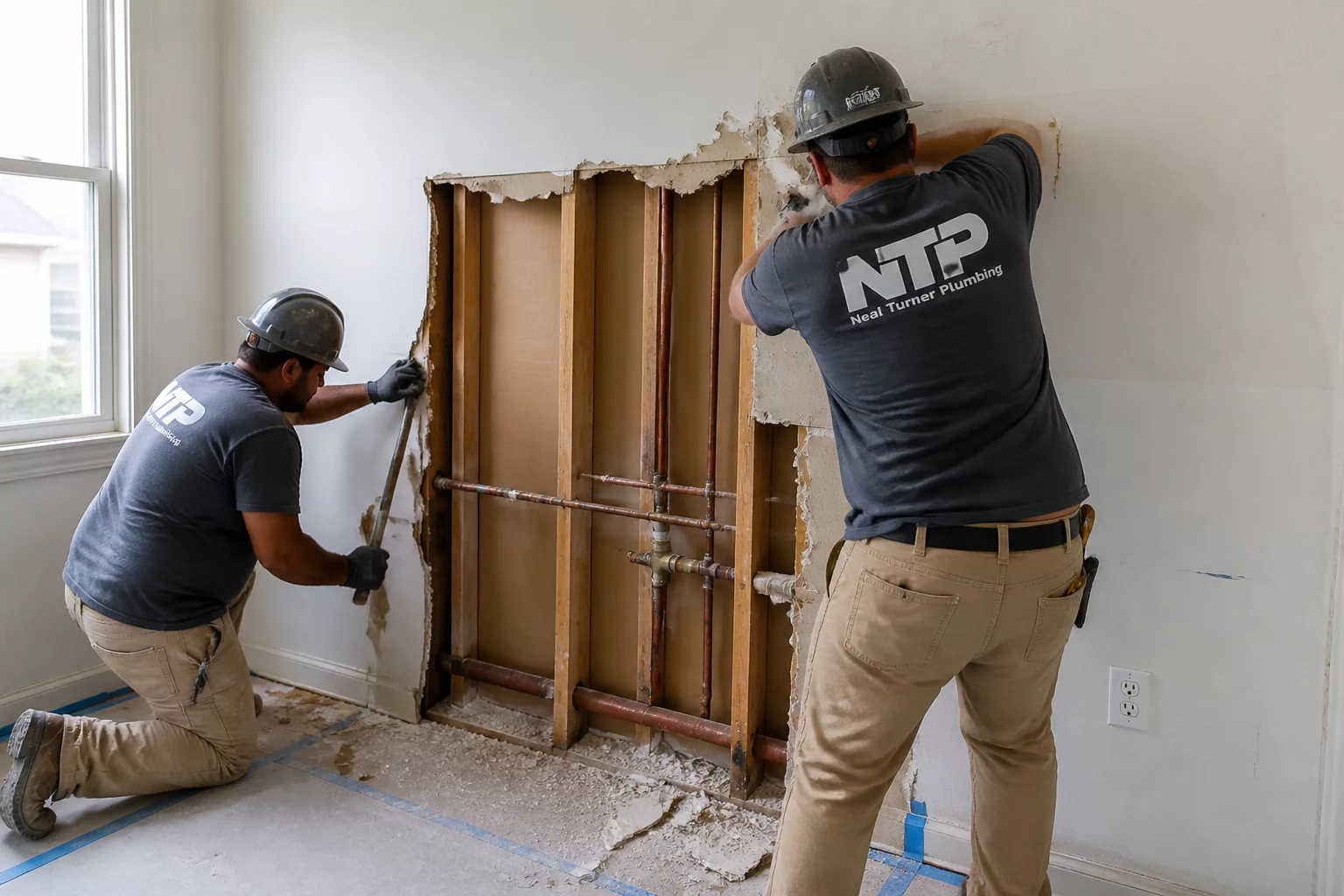

Demolition Boundary Verification

All cutlines must follow structural centerlines with a minimum 4-inch standoff from existing plumbing stacks and electrical junctions to ensure clean fastening surfaces during future wallboard reinstallation.

Demolition to Mechanical Transfer

The demolition crew logs cavity depth, fastener clearance, and existing conduit conditions before handing physical possession of the exposed cavity to plumbing or electrical specialists.

Cavity Inspection Checklist

Verify zero structural notch violations, intact fire-stopping collars, and completely vacuumed wall baseplates prior to authorizing closure or primary repair work.

Sequence Facts

Access Specifications

Primary Phase
Selective Demolition
Handoff Trade
Demo to MEP Trades
Containment Type
Level 2 Dust Barrier
Inspection Point
Pre-Repair Cavity Log
Critical Risk
Collateral Trim Damage
Workflow Rule

Never permit mechanical trades to perform unguided cutouts; access openings must always be made by demolition technicians according to framing layouts.

Explore Handoff Ledgers

Review documented transfer agreements between demolition and mechanical specialists.

Open Handoff Ledgers
Field Discussion

Workflow Notes & Observations

No comments yet. Be the first to leave a workflow note.

Share Workflow Notes