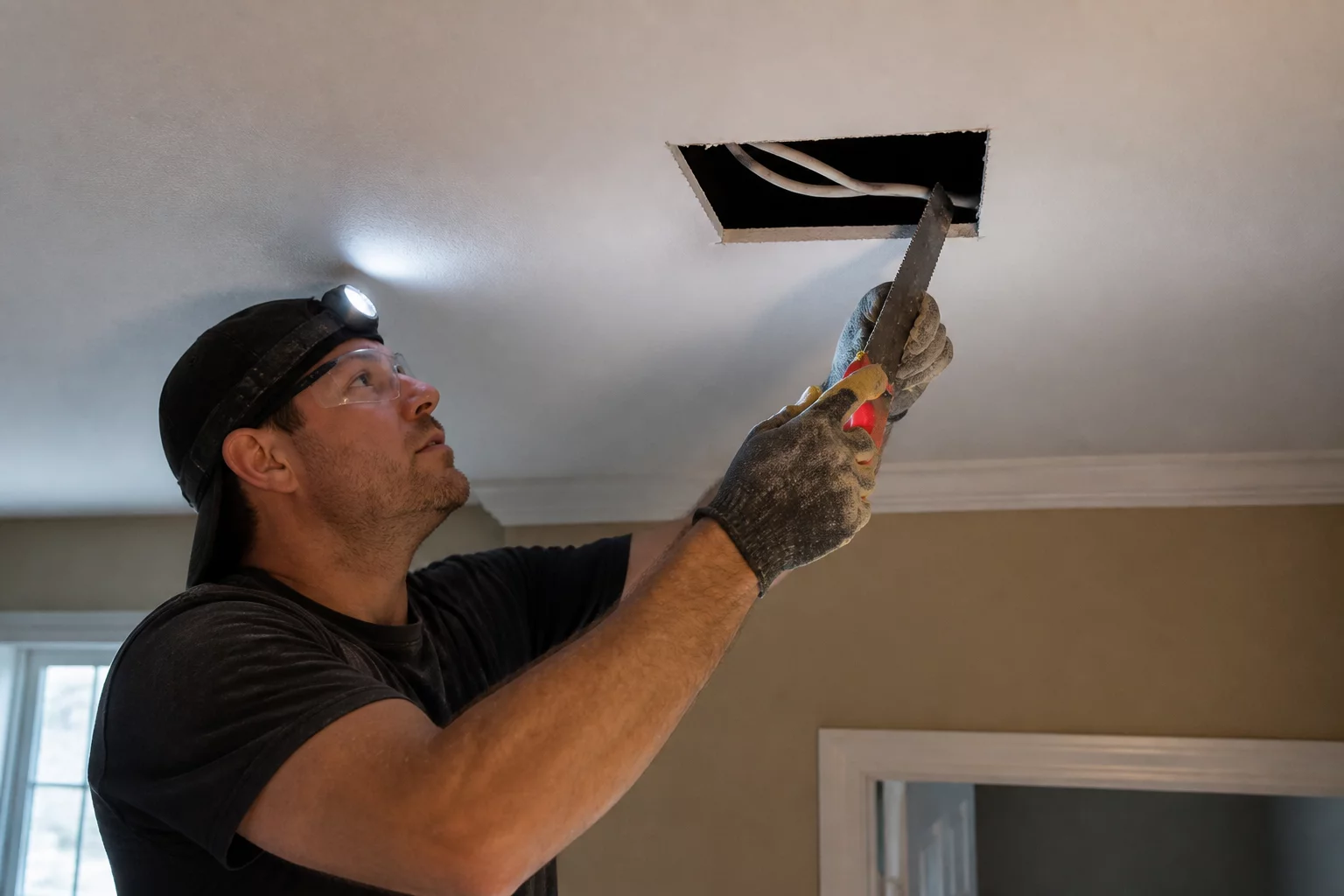
In multi-layered commercial and residential assemblies, mechanical failure rarely occurs directly in the open. When electrical conduits, HVAC trunk lines, or pressurized plumbing risers fail inside drywall cavities, technicians cannot simply execute a repair on day one. An initial phase of selective cutting, structural support verification, and containment barrier installation must take place. Attempting to start corrective trades before establishing clean physical clearance risks damaging adjacent infrastructure and contaminating finished living quarters.
This case demonstrates how a severe ceiling cavity fault remained unserviceable until demolition specialists created a 48x48-inch reinforced access portal. The initial scope listed wire splicing and conduit replacement, yet without cutting through the double-layer 5/8-inch drywall ceiling and installing negative pressure containment, electricians could neither safely reach the junction box nor verify framing integrity.
Chronological Step Execution
-
01
Environmental Containment & Utility Mapping
Technicians established zip-pole dust barriers with HEPA filtration and scanned the ceiling envelope using thermal sensors to identify stud locations and concealed secondary conduits.
-
02
Controlled Precision Cutting & Debris Removal
Selective cutouts preserved load-bearing ceiling joists while safely dropping gypsum panels without pulling on live flexible conduit lines.
-
03
Physical Access Clearance & Trade Handoff
Mechanical specialists performed edge chamfering, installed temporary structural braces, and formally cleared the work envelope for licensed electrical entry.
Skipping this preparatory access sequence consistently creates project stalls. Documenting access creation as a separate, non-negotiable dependency ensures realistic scheduling, prevents accidental damage to undamaged building elements, and maintains clear trade boundaries throughout the remediation lifecycle.