



Core Industry Sequence Takeaways
Structural recovery relies on linear trade dependencies rather than simultaneous task execution to prevent secondary moisture entrapment and framing rework.
- Decontamination and extraction must reach equilibrium before moisture barriers or insulation can be installed.
- HVAC isolation during structural remediation prevents cross-contamination across unaffected architectural zones.
- Trade handoffs between dry-out technicians and rough framing trades require standardized psychrometric moisture clearance logs.
Stabilization and Environmental Isolation
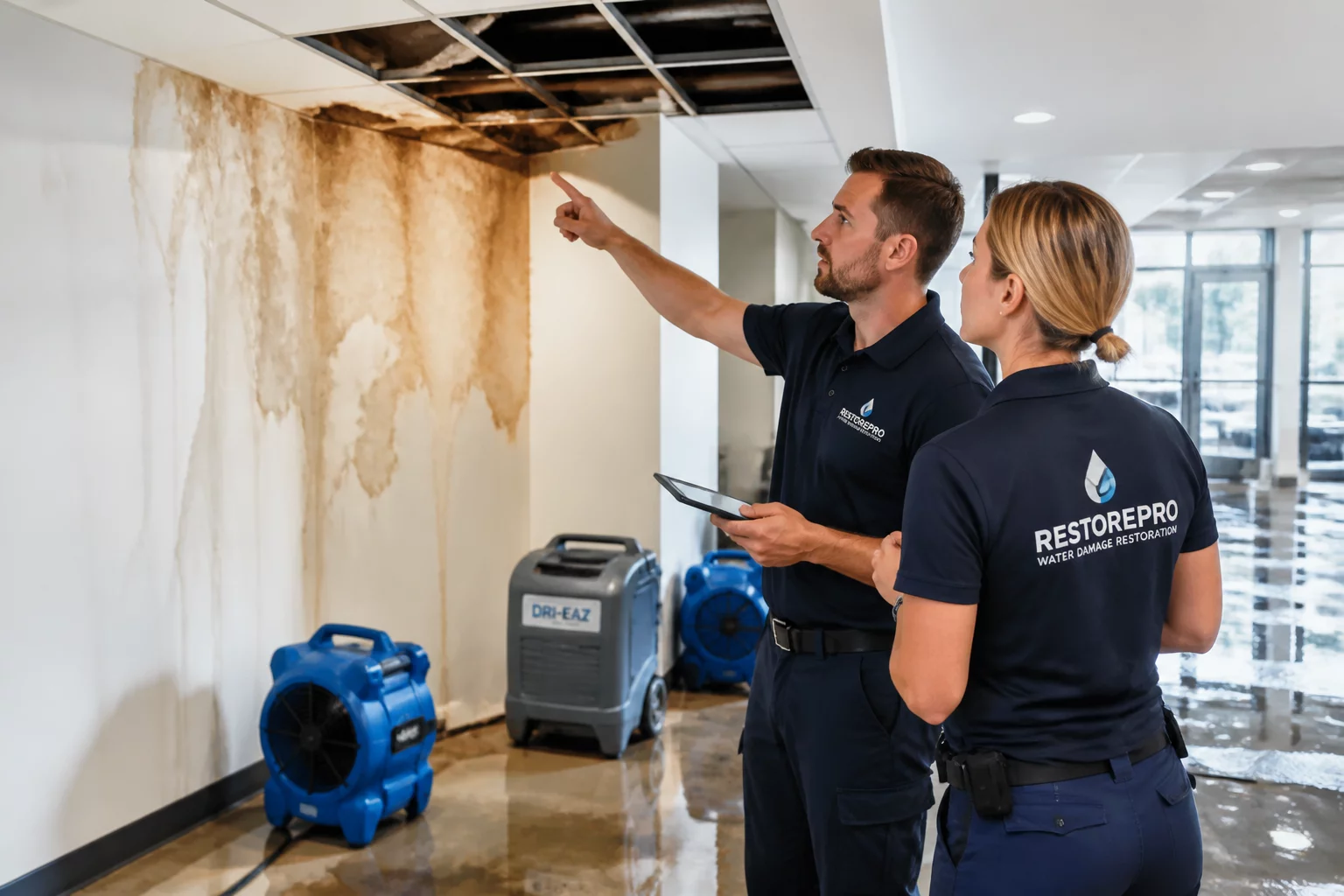
Emergency stabilization establishes physical containment barriers, controls air currents, and isolates undamaged structural zones. Restoration crews map electrical pathways, shut off hazardous utilities, and install negative air pressure machines equipped with HEPA filtration before any mechanical disturbance begins.
Skipping containment or rushing extraction leads to particulate migration into clean living areas. Initial sequencing requires air filtration units to run continuously while thermal imaging cameras determine the true migration boundaries of water intrusion behind wall assemblies.
Controlled Demolition and Substrate Extraction
Controlled removal of unsalvageable finish materials exposes concealed studs, sill plates, and subfloor assemblies. Technicians remove wet drywall up to two feet above the highest moisture waterline, strip waterlogged fiberglass batt insulation, and unfasten damaged tack strips without compromising structural joists.
Demolition sequencing requires debris to be bagged directly within containment zones before transit through unaffected corridors. Substrate surfaces are thoroughly vacuumed with HEPA equipment to remove residual organic matter that could foster mold colonization during the subsequent drying phase.
Psychrometric Drying and Antimicrobial Treatment
Industrial LGR dehumidifiers and high-velocity axial air movers establish a balanced evaporative microclimate. Technicians monitor grain depression, vapor pressure differentials, and wood moisture equivalent percentages at calibrated 12-hour intervals to ensure consistent moisture dissipation across all affected structural members.
Applying botanical or EPA-registered antimicrobial agents occurs only after bulk water extraction is complete. Premature chemical application onto saturated surfaces dilutes active ingredients and impedes effective penetrative disinfection across deep timber framing.
Structural Clearance and Trade Reconstruction Handoff
The final stage transitions the project from mitigation to reconstruction. Independent psychrometric readings verify that all wood framing registers below 15% moisture content and concrete subfloors meet dry standards before rough carpentry, drywall hanging, or insulation crews receive site access.
Formalizing the handoff ledger guarantees that mechanical, electrical, and finish trades do not seal wet cavities. Comprehensive moisture verification certificates eliminate liability disputes and secure documented compliance with building codes and insurance audit guidelines.